
General Information
Last Updated: May 2026
The following provides you with an overview of the information that pertains to your employment as a State of Alaska employee. To determine how this information applies to you specifically, you may need to refer to your individual collective bargaining agreement.
Employment Status
The following describes the six main types of positions in the classified service. Your supervisor can tell you the position type and required hours for your position.
- Permanent Full-time:
- Work 37:30/40 hours per week. For health insurance and retirement benefits purposes only, 30 hours is considered full-time. Supervisory (SU) and Labor, Trades and Crafts (LTC) employees are regularly scheduled to work 40 hours per week.
- Permanent Part-time:
- Work less than 37:30 hours per week. Must work a minimum of 15 hours per week to be eligible for health insurance with retirement benefits, holiday pay and accrued leave prorated based on the number of hours worked per week.
- Permanent Seasonal:
- Full-time or part-time, but less than 12 months per year.
- Nonpermanent, Short-Term:
- Short-Term nonpermanent employment is less than 120 calendar days and the employee is not eligible for most benefits.
- Nonpermanent, Long-Term:
- Long-Term nonpermanent employment is longer than 120 calendar days and the employee may be entitled to holiday pay, accrued leave, and health insurance, but is not eligible for PERS/TRS retirement benefits.
- Nonpermanent, On-Call:
- On-call nonpermanent employment is sporadically scheduled or called to work. The incumbent has no minimum workweek requirements and is not eligible for most benefits.
Nepotism Prohibited
The Executive Branch Ethics Act (AS 39.950 (11)) prohibits employees from being in an employment relationship with an immediate family member, including a conjugal relationship that is not a legal marriage.
The statute and regulation (AS 39.90.020 and 2 AAC 07.112 and 2 AAC 07.950) pertaining to nepotism also prohibit the appointment of certain individuals. The regulation does allow for a waiver if there is not a direct supervisory relationship.
For more information view the Nepotism Ethics FAQ (PDF).
Probationary Period
All new employees in the classified service who are hired into a permanent position are required to complete a probationary period prior to being allowed to become permanent. During this period, the supervisor will evaluate the employee's job performance. If the employee's performance is not satisfactory, the employee will be notified in writing during the probationary period and the employee may be terminated at that time or have their probationary period extended.
Duration, extension, and other details of the probation period differ depending upon the governing collective bargaining agreement. See specific agreement for details.
Performance Evaluations
Performance evaluations are required annually for all classified employees. They are designed to help supervisors clearly communicate and rate performance expectations, annual goals, and learning for employees. Performance evaluations are initiated at the midpoint and end of your probationary period and are continued annually after that period. A performance evaluation should be completed when the employee changes positions, has a change of supervisor, when there is a change in performance, or at the time the employee terminates their employment with the state.
Performance evaluations are based upon the performance expectations based on the position description (PD), annual goals, and the learning of the employee. A copy of your PD can be obtained from your supervisor or by making a request to Employee Records.
Pay/Compensation Information
Timesheets
YYou may be required to complete a timesheet for each pay period; please check with your supervisor for specific requirements. Further information regarding timesheets can be found on the Payroll Timesheet Information page.
Payroll Warrant (Your Paycheck) and Direct Deposit
Your payroll warrant will be issued to you on a biweekly payroll schedule (i.e., every other week). Please refer to the appropriate State calendar for dates. Payroll warrants are typically in the mail prior to the official payday so employees will have them by the official payday. Electronic fund transfers are established via the Direct Deposit Authorization form and typically take place a couple days prior to payday, but the state guarantees you’ll be paid by payday and not before (so plan your automatic withdrawals accordingly).
Employee Self Service (ESS)
State employees who receive their pay via direct deposit can view and download their payroll advice (paystub) information through the Employee Self Service website. This website allows State employees to easily access their own personal information in a secure manner that protects confidentiality. Important information about ESS can be found on the IRIS References & Resources page.
The payroll information presented online is identical to the information delivered to employees who have their paper warrants (paychecks) mailed. State employees who receive a paper paycheck will receive their payroll advice attached to the warrant.
Salaried Versus Hourly Pay
Salaried employees are not overtime eligible and will receive a full salary when they are in full pay status in a pay period. Some employees are paid hourly and are overtime eligible. They will receive their appropriate hourly pay rate for all hours worked; for employees with a varying schedule, their pay may fluctuate from pay period to pay period based on their hours worked. If you are unsure if you are paid as an hourly or salaried employee, contact your supervisor or the Employee Call Center.
Salary Schedules
Individual Salary Schedules provide the bi-weekly salaried or hourly pay rates for each salary range. Salary schedules are determined by collective bargaining agreements, the strike class of the position, and geographical locations, and are maintained by the Department of Administration, Division of Finance.
Office Closures for State of Alaska
The Department of Transportation and Public Facilities on occasion issues notices of office closures due to inclement weather or other reasons. These notices are drafted to communicate information believed to be essential for state employees and the public.
To receive closure notifications by phone or email when you sign-up or manage your GovDelivery subscription (select OFFICE CLOSURE list after login) at https://dot.alaska.gov/inform/. It is encouraged to sign up for multiple notification methods to ensure you are receiving them timely.
For more information see the Office Closure Policy and Procedures located on the Department of Transportation and Public Facilities Office Closures for State of Alaska web page.
State Calendars
State Calendars highlighting paydays and holidays are available for employees on the Department of Administration website. More detailed payroll Calendars & Schedules are available on the Division of Finance website.
Holidays
Most employees except short-term nonpermanent, on-call, emergency, or intern employees are entitled to payment for all legal holidays listed in the individual collective bargaining unit agreements or the Personnel Rules / Alaska Adminstrative Code 2 AAC 07.810, whichever covers your employment status. In order to be eligible for holiday pay, you must be in pay status at least a portion of the scheduled workdays immediately preceding and following the holiday. Part-time employees will receive holiday pay on a prorated basis. See the State Calendars for a complete listing of observed holidays. If you do not work a regular Monday-Friday work week, please refer to your collective bargaining unit agreement for specific holiday observance information.
Payroll Deductions Summary
The State of Alaska as your employer must take certain mandatory deductions from your paycheck as required by law, regulation, or collective bargaining agreement. The following is a summary of the possible mandatory deductions.
- Medicare Liability:
- Mandatory federal tax for Medicare Liability and Coverage of 1.45% of gross pay.
- Public Employees' Retirement System (PERS) or Teachers' Retirement System (TRS):
- Pre-taxed mandatory deduction of gross pay.
- Supplemental Annuity Plan (SBS-AP):
- Pre-taxed mandatory deduction of 6.13% of gross pay to an annuities account up to the current year social security limit.
- Employee Premium Contribution for Health Insurance:
- Varies, depending on your collective bargaining agreement and your selections.
- Union Dues:
- Please contact your union for this information.
- Federal Withholding:
- Federal income tax.
Other payroll deductions will be taken to cover the cost of health insurance and other optional insurance benefits that you may elect. Refer to the Insurance Enrollment Information page for more information about your enrollment options.
Below is a list of some of the most common paystub deduction abbreviations:
Pre-Tax Employee Deductions
View / Hide Pre-Tax Deductions Table
Post-Tax Employee Deductions
View / Hide Post-Tax Deductions Table
Employee Taxes
Office of Information Technology
Office of Information Technology (OIT) staff can help with problems with logging in or other issues with computers. There are a couple of helpful pages to be found through OIT, listed below.
- Password Recovery Page - If you need to reset your State of Alaska password, you can go to this page. If you are outside of the State of Alaska system, you will need to go to the non-secure Password Recovery page.
- Helpdesk Contact Info - If a new State of Alaska employee has any problems outside of password recovery, use this page to contact the department’s helpdesk.
Leave Benefits
All probationary/permanent employees accrue personal leave 26 times per year; if you have prior state service, you may be credited with that service for the calculation of your accrual rate. If you are a part-time employee, your leave will accrue on a prorated basis. If you work seasonally, you will accrue leave during the period you are on active duty.
Please refer to your individual bargaining unit agreement for a complete explanation of your leave benefits including accrual rates, mandatory leave requirements, and to determine when your accrued leave is available for use. In the uncommon event that a year includes 27 pay periods, consult your individual bargaining unit agreement to determine whether leave accrual is permitted for the additional pay period. Many agreements do not authorize leave accrual during the 27th pay period.
Accrued personal leave is available for use after successful completion of thirty (30) consecutive calendar days of leave eligible employment. The leave eligibility date would be reset if you had a full day of leave without pay in your first thirty (30) days of employment. Personal leave can be used for both vacation, sick and medical reasons. Leave taken for medical reasons may be for the employee or the employee's immediate family. Whenever possible, leave should be pre-approved. You should check with your supervisor regarding requirements for requesting leave in advance and notifying someone of the need for unplanned leave.
Leave balances in the bargaining unit agreements and the State’s payroll system, IRIS, are displayed in hours and minutes, shown in the HH:MM format. Employees are responsible for monitoring their own leave accruals and usage each pay period by reviewing their paystubs and leave history in IRIS Employee Self Service (ESS).
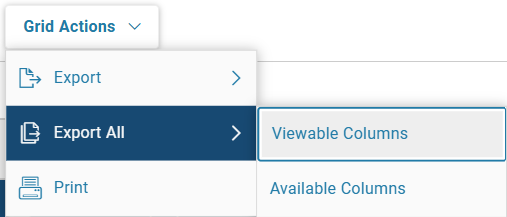
Within ESS, selecting the Time and Leave button provides access to several tabs containing detailed information about leave activity. Employees may also download their complete leave accrual and usage history using the Export All option on the View Leave Details page.
If an employee identifies any discrepancies or has questions about their leave information, they should contact the Employee Call Center for assistance at (907)465-3009 or EmployeeCallCenter@alaska.gov. See the Auditing Leave Information section below for more information on how to audit your leave.
NOTE: Please be aware that defaulting into leave without pay (LWOP) may adversely affect your leave and insurance benefits. Leave accruals are prorated when LWOP occurs and insurance effective dates may be affected. The employee’s leave anniversary date, probationary period, and merit anniversary date are advanced by one month for each accumulation of 23 days of LWOP in the leave year (from January 1 to the following December 31) unless otherwise provided for in statutes, regulations or contracts. Further information regarding LWOP and insurance can be found on the Insurance Enrollment Information page.
ASEA/General Government Unit Annual Rounding Adjustment
Due to the State’s transition from semi monthly to biweekly payroll processing on June 1, 2020, a small annual adjustment is needed to ensure employees leave accruals calculate correctly. Each January, employees will see a slight increase in their leave accrual amount.
GG/GY (ASEA) Annual
37.5 HR (GG1N / GG1Y)
View / Hide 37.5 HR Annual Leave Table
40 HR (GY1N / GY1Y)
View / Hide 40 HR Annual Leave Table
GP/GZ (ASEA) Personal
37.5 HR - Hired Before 7/1/13 (GP1N / GP1Y)
View / Hide 37.5 HR Personal Leave (Before 7/1/13) Table
40 HR - Hired Before 7/1/13 (GZ1N / GZ1Y)
View / Hide 40 HR Personal Leave (Before 7/1/13) Table
37.5 HR - Hired On/After 7/1/13 (GP2Y)
View / Hide 37.5 HR Personal Leave (On/After 7/1/13) Table
40 HR - Hired On/After 7/1/13 (GZ1N / GZ1Y)
View / Hide 37.5 HR Personal Leave (On/After 7/1/13) Table
Auditing Leave Information
Employees are responsible for auditing their own leave accrual and usage each pay period and can access leave history through IRIS Employee Self Service (ESS). There are a few tabs that give detailed information about leave usage and accrual to help employees monitor their leave. When logged into IRIS ESS, select the Time and Leave button.
From here, there are different tabs that provide leave information, and an employee can download their leave accrual and usage history by using the Export All function on the View Leave Details page under Grid Actions.

If an employee identify any specific pay or leave discrepancies employees should contact the Employee Call Center for assistance at EmployeeCallCenter@alaska.gov.
Union Information
Union Membership / Representation
Most employees who work for the State of Alaska are part of the classified service and are covered by a collective bargaining unit agreement. This means that your working conditions, salary, benefits, and many other aspects of your employment are addressed by this agreement. Refer to the individual Collective Bargaining Agreements located on the Labor Relations website.
If your position is represented by a union, it is your responsibility to contact them on your own time regarding any obligations. The contact information is included on the Union Notification form (PDF) and the GGU Notification Form (PDF) on the New Employee Orientation Forms page. If you are unsure which union represents you, please check with your supervisor.
Union Business Leave Bank
In accordance with the union contracts, new employees may be assessed a pre-determined amount of personal leave to be transferred to the appropriate union business leave bank. The initial union leave deduction typically takes place during the first few months of employment and will be reflected as an adjustment within the earnings section of your paystub. Please refer to your individual bargaining unit agreement or contact the union that represents you for specific information.
Union Contracts
To request a copy of your bargaining agreement, please contact your designated union office. Electronic versions may be found on the Labor Relations website.